
Every organization runs on reports. Daily sales summaries, monthly reconciliations, and financial statements keep teams aligned and decisions grounded in data. Yet producing them is often anything but efficient. Employees spend hours logging into different systems, downloading spreadsheets, cross checking numbers, and re entering data into portals, tasks that are repetitive, rule based, and, frankly, a poor use of human talent.
This is precisely the problem that Robotic Process Automation (RPA) was built to solve. RPA uses software robots, or “bots,” to automate repetitive, rule based tasks across various computer applications, mimicking the clicks, keystrokes, and navigation that a human worker would otherwise perform manually. Among the many RPA platforms available today, UiPath has established itself as a recognized industry leader, trusted by organizations worldwide to bring structure, speed, and reliability to their most tedious digital workflows.
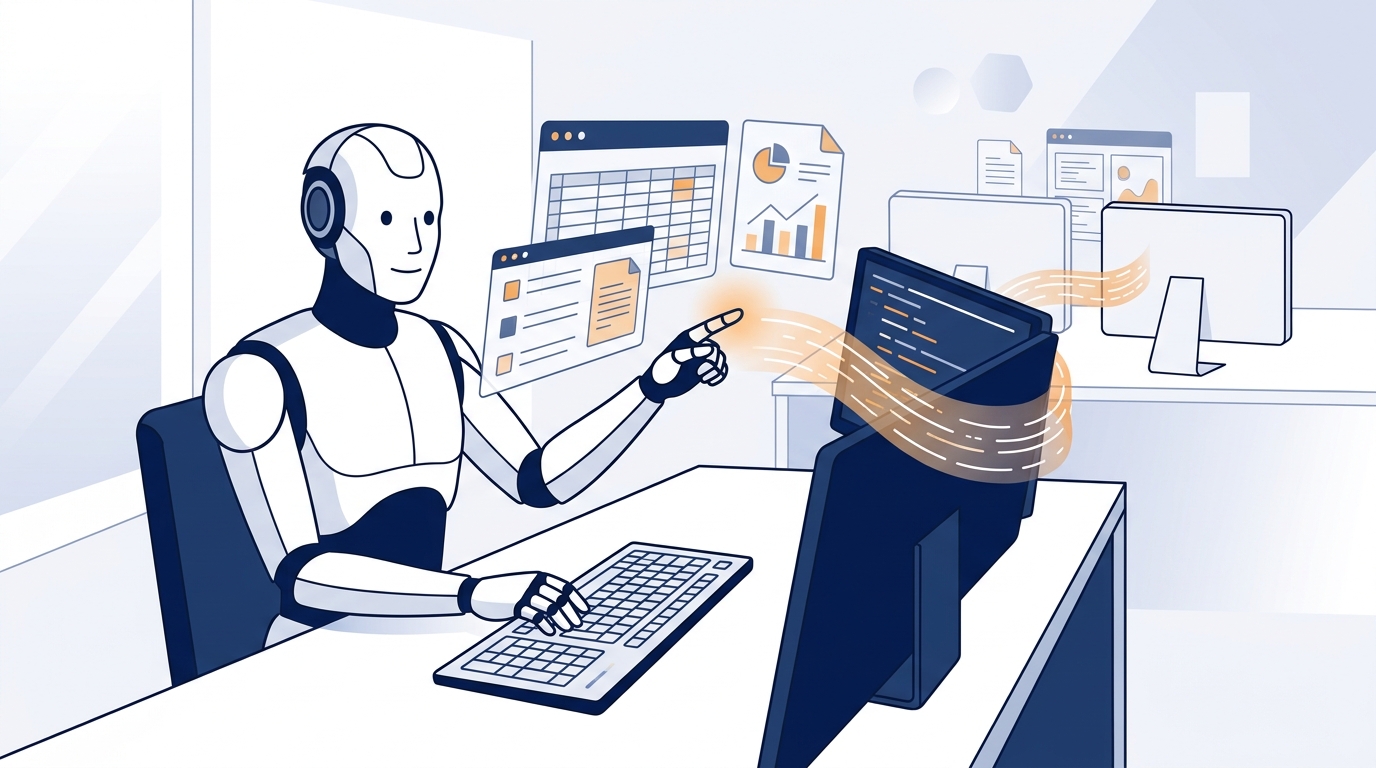
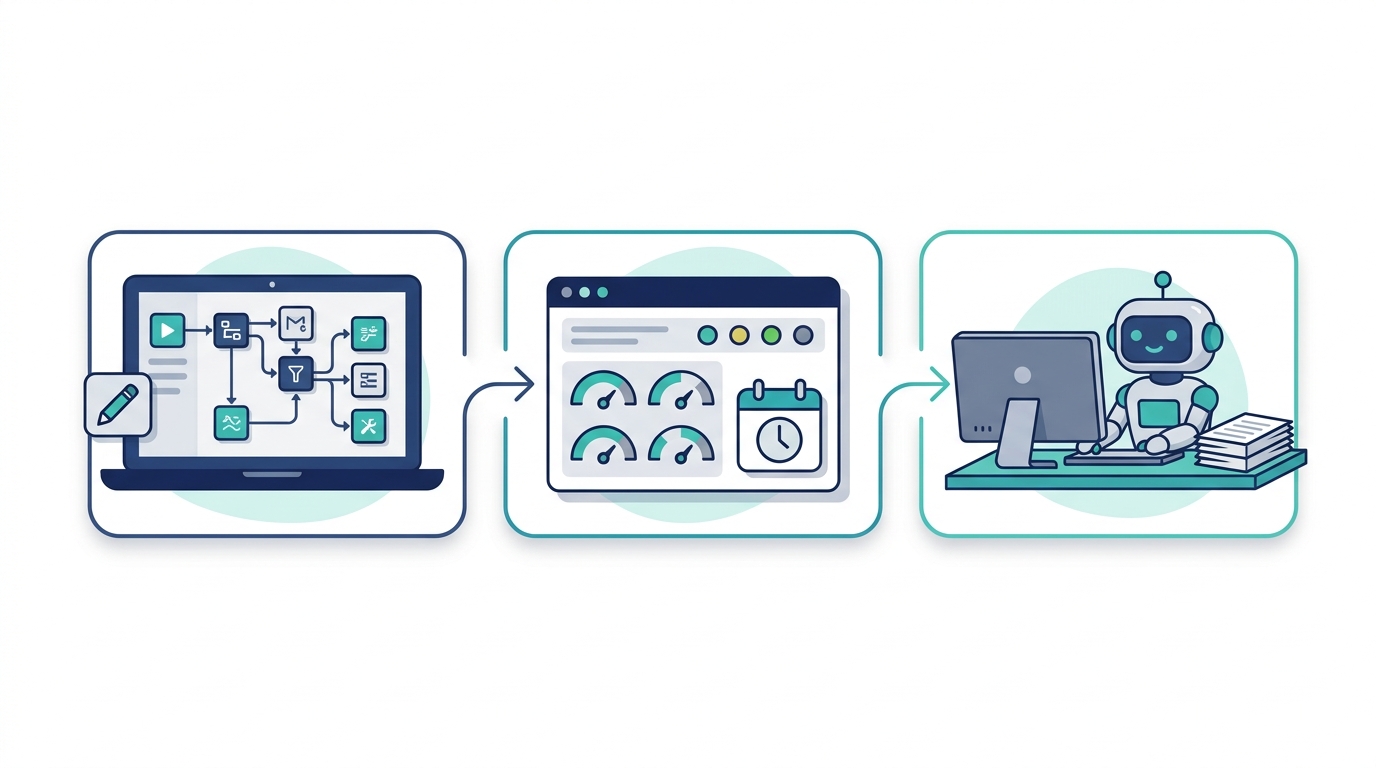
UiPath’s strength lies not in a single tool but in a coordinated platform built from three core components, each with a distinct role in the automation lifecycle.
The first is UiPath Studio, the design environment where automation workflows are built. Studio’s biggest advantage is accessibility: its simple drag and drop interface allows developers, and even non technical process owners, to map out a workflow visually rather than writing code line by line. Business logic, decision points, and application interactions can all be assembled as connected building blocks.
The second component is UiPath Orchestrator, the control center of the entire operation. Running through a browser, Orchestrator lets teams manage, control, and monitor every bot in the organization from one place. It schedules jobs, distributes work across multiple robots, stores credentials and reusable assets securely, and gives administrators real time visibility into which processes are running, which have completed, and which need attention.
The third and final component is the UiPath Robot itself, the workhorse that takes over from Studio’s design and Orchestrator’s instructions to execute the automated process. Robots can run unattended on a server, working through scheduled jobs around the clock, or attended on a user’s desktop, stepping in to assist with a task the moment it is needed. Together, these three components form a complete cycle: design in Studio, deploy and monitor through Orchestrator, and execute through the Robot.
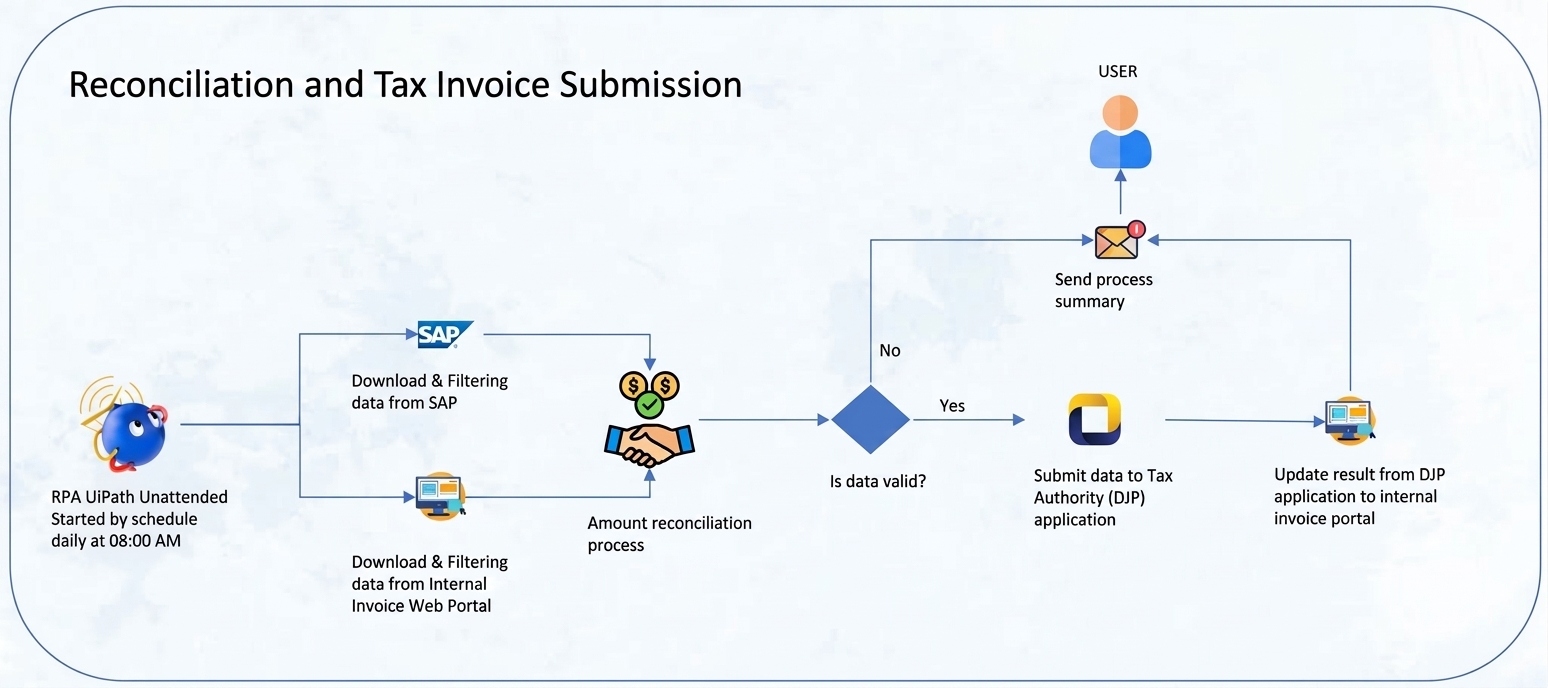
To see what this looks like in practice, consider a scenario common to many finance and accounting departments. Every day, figures need to be reconciled between two systems: SAP, where transaction data is recorded, and an internal web portal, where a corresponding report or dataset is generated. Done manually, this workflow means logging into SAP, downloading raw data, filtering it down to the fields that matter, comparing it line by line against another dataset, entering the confirmed or corrected figures into a portal, and finally letting the relevant team know that the process is complete.
With UiPath, an unattended robot can be scheduled to start this entire routine automatically, for instance at 8:00 each morning, without anyone needing to trigger it. The bot logs into SAP, downloads the required data, and applies the same filtering rules a human employee would use. It then performs amount reconciliation, comparing figures between the two sources according to predefined validation rules, and flagging any discrepancies that need attention. Once the data is confirmed as valid, the robot inputs the final, verified figures into the relevant web portal or application, exactly as an employee would, only faster and without typing errors. To close the loop, it sends a summary email to the relevant users, informing them that the reconciliation is complete and noting any items that require human review.
The result is a reporting process that runs quietly in the background every single day, freeing the team from a routine that once consumed a significant part of their morning.
The value of automating reporting workflows goes well beyond convenience. Because software robots operate 24/7, reports that once waited for someone to arrive at their desk can now be ready before the workday even begins. This shift brings several concrete advantages.
Productivity rises, since employees are freed from repetitive data handling and can redirect their time toward analysis, strategy, and other work that genuinely requires human judgment. Accuracy improves as well, because a properly configured bot follows the same rules every time, without the fatigue or momentary distraction that leads to manual entry errors. Over time, this consistent execution also supports cost reduction, as fewer hours are spent on manual processing and fewer errors need to be corrected after the fact. Finally, UiPath’s ability to integrate with a wide range of systems, from ERP platforms like SAP to web portals, email, and Excel, means these benefits are not confined to a single department. The same approach that streamlines one reporting workflow today can be extended to other repetitive processes across finance, operations, HR, and beyond.
For organizations looking to reclaim time, reduce errors, and build a more resilient reporting process, UiPath offers a proven, scalable way to get there.
Are you ready to meet your new digital workforce?
Don't let your competitors out-automate you. Contact Sazanka Henig Solusi today for a customized UiPath Readiness Assessment. Let our experts show you exactly which of your processes are bleeding money, and exactly how we can build a UiPath solution to turn your bottlenecks into your biggest competitive advantage.
Transform your potential. Automate with Sazanka Henig Solusi.
For more information and consultation, contact our expert:
Hananto Pandu SE., S.Kom., Ak., CA., CPA., ASEAN CPA. - 0896 3626 1684
Best Regards,
Yohannes Ekaputra Sananto SE. MSc.
yohannes.sananto@sazankahenig.com
Financial Product Consultant
PT Sazanka Henig Solusi
Are you ready to take your business to the next level? Contact us today to learn how our innovative solutions can help you achieve your goals and drive success
Get Started%202.png)