
An educational guide to AI-assisted accounting, and how AISA puts it into practice.

A new accounting standard takes effect on 1 January 2027. For finance teams, that means more than a fresh set of rules to read. It means more research, more judgment calls, and more documentation, all against the same closing deadlines as before.
Most teams already run accounting software. It records transactions well. What it does not do is tell you which accounting treatment applies, why it applies, and where in the standard that answer comes from. That gap is where hours quietly disappear.
AISA, developed by PT Sazanka Henig Solusi, is designed to close that gap. This article explains where accounting time really goes, how an AI assistant can help, and what to look for before you adopt one.
Ask a finance team where the hours go and the answer is rarely data entry alone. Time tends to disappear into three places:
• Research: finding which paragraph of an accounting standard applies to a specific transaction.
• Calculation: working out the amounts and preparing the journal entries.
• Documentation: building what an auditor will ask for, such as disclosure checklists, working papers, and an audit trail.
Each of these needs professional judgment. But a large share of the effort is reading, locating, calculating, and writing things down. Those are tasks an AI assistant can support, while the accountant keeps every decision.

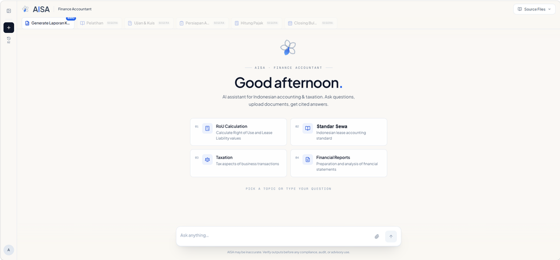
AISA is an AI assistant for Indonesian accounting and taxation. You ask questions in natural language, upload documents, and receive answers with citations. It is built on a curated library of more than 2,400 regulatory documents covering accounting standards, Islamic (syariah) accounting, taxation, and accounting principles.
Where conventional software only records what has already happened, AISA works with the transaction and gives guidance on its treatment. It does this through three capabilities:
• Real-time accounting guidelines. Automatic references to the relevant paragraphs of accounting standards, interpretations, and tax regulations.
• Smart compliance. Uploaded transactions are converted into journal entries, financial reports are prepared, and compliance checks run in real time.
• Smart assistant. An AI agent for day-to-day questions in natural language, draft reviews ready for verification, and a digital audit trail.
Every answer comes with citations to the source article and paragraph. Users can verify where guidance came from instead of trusting a black box.
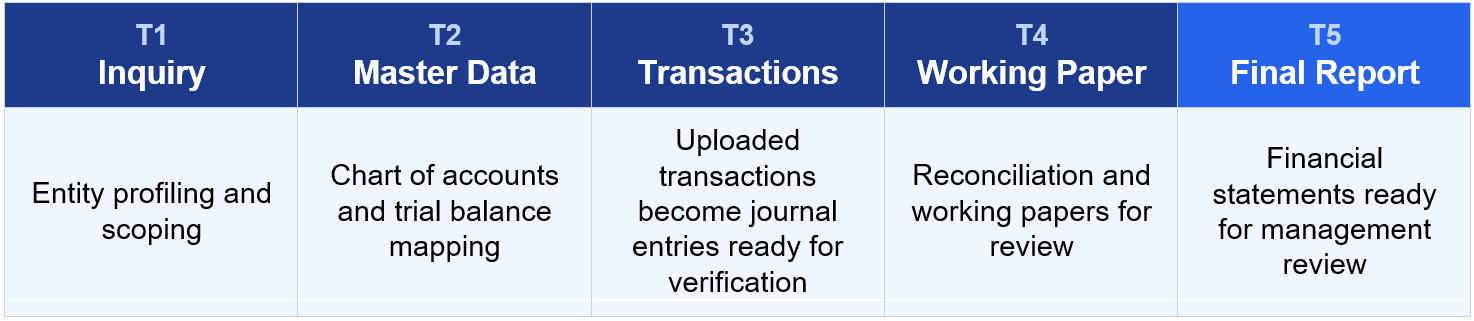
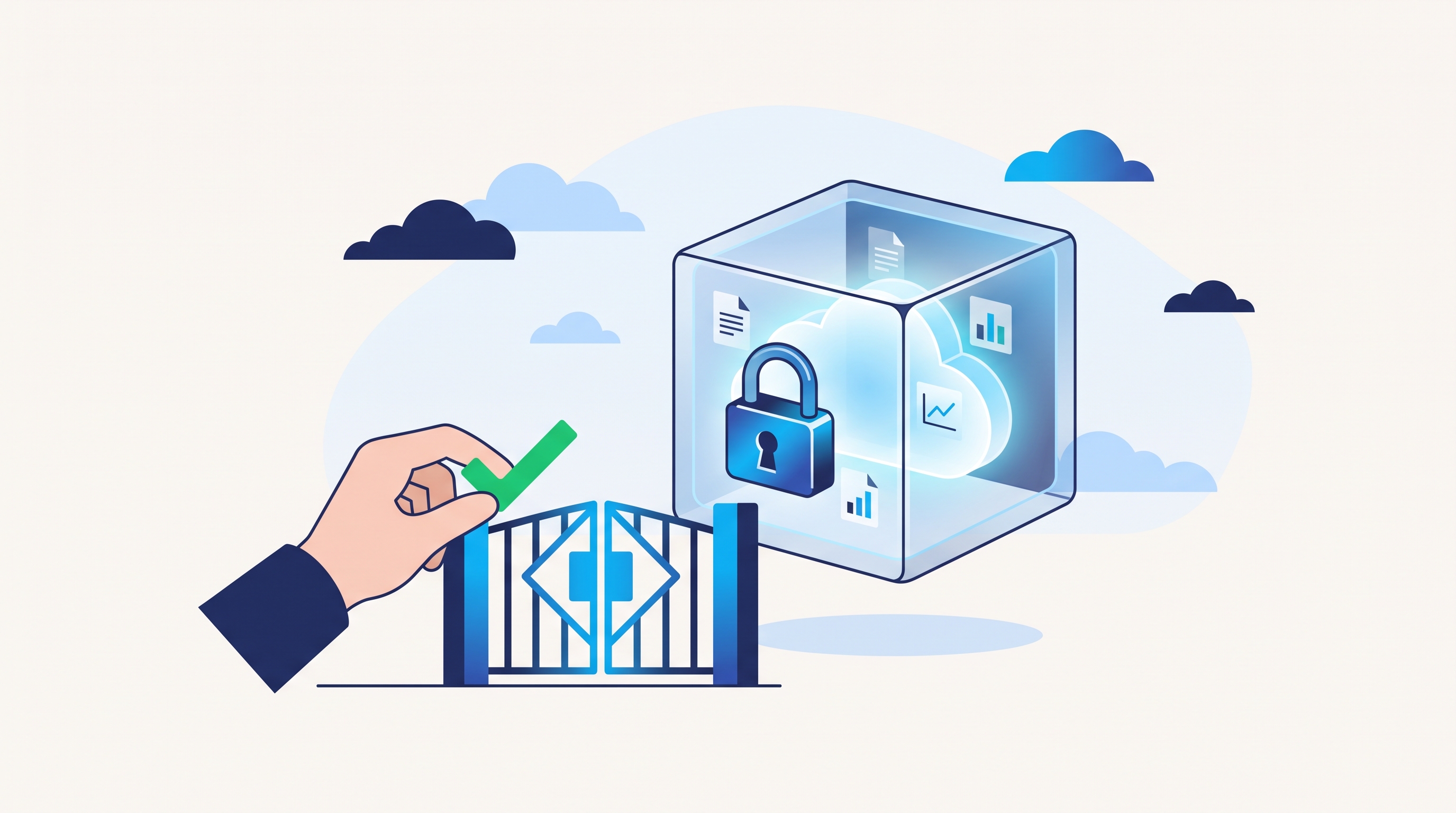
AISA follows a five-stage workflow. Between every stage there is an approval gate, so nothing moves forward without a person signing off.
In practice, a user can start with a single sentence asking for a financial report. AISA proposes a structured plan with citations, asks a few scoping questions, requests the documents it needs, and then moves through the stages as the user approves each one.
AISA is an assistive tool, not a replacement for professional judgment. Its outputs are non-final and need professional validation before any compliance, audit, or advisory use. Manual review is expected whenever confidence is low, inputs are incomplete, or materiality is high.
To support that review, every recommendation records the source data, the rule applied, the calculation result, a timestamp, and the user identity. We believe an AI that claims to replace an accountant's judgment is not one to trust. AISA proposes, and the accountant decides.
The table below shows an illustrative simulation of one complex accounting case. It is not actual client data.
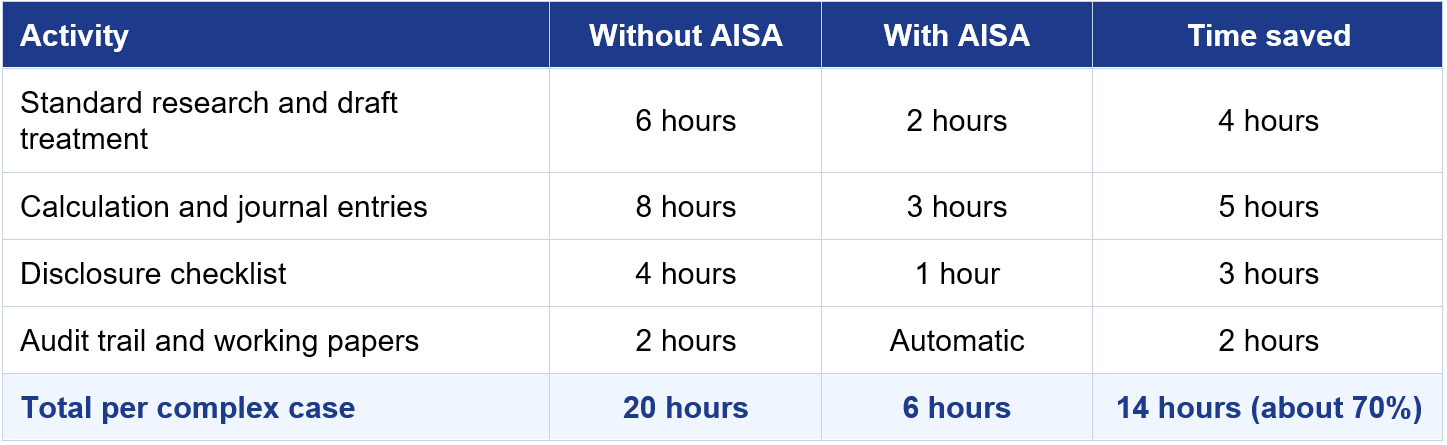
The point is not only saved time. Hours freed from standard research can move into analysis, forecasting, and advisory work for management. PT Sazanka Henig Solusi also estimates that rework can fall from about 15% to 5%.
Finance data issensitive, so AISA is built with privacy at the foundation:
• Private infrastructure. AISA runs on a single-tenant private cloud for each client.
• Closed knowledge base. A closed knowledge base that does not train public AI models.
• Protected access. Full HTTPS/TLS encryption, and credentials are stored hashed.
• Mid-sized public accounting and appraisal firms that need reliable, cited guidance and a stronger audit trail.
• Finance managers and controllers who want faster closing and reports they can confidently present.
• Accounting professionals and practitioners who want less time on research and more time on analysis and advice.
Before choosing any AI tool, start with your own process. These questions show where an assistant could help first:
1. Which accounting process takes the most time in your team?
2. How often do you need outside help for accounting standard or tax questions?
3. How long does your monthly close take, and how long should it take?
The question is no longer whether AI will change accounting work. It is whether your team will be ready when the new standard arrives. Seeing AISA work on a real case of your own is the best way to find out.
Schedule a demo or consultation with PT Sazanka Henig Solusi. Please contact our expert:
Hananto Pandu SE., S.Kom., Ak., CA., CPA., ASEAN CPA. - 0896 3626 1684
Best Regards,
Yohannes Ekaputra Sananto SE. MSc.
yohannes.sananto@sazankahenig.com
Financial Product Consultant
PT Sazanka Henig Solusi
Sazanka Henig Solusi is a Jakarta-based enterprise technology partner delivering simple, integrated, and intuitive solutions across Enterprise Performance Management, business intelligence, process automation, generative AI, compliance, HR technology, and cybersecurity, helping Indonesian enterprises turn complex business transformation into a lasting competitive advantage.
Are you ready to take your business to the next level? Contact us today to learn how our innovative solutions can help you achieve your goals and drive success
Get Started%202.png)